Governance & Democracy

On the Internet Nobody Knows You're a Dog

On the Internet Nobody Knows You're a Dog

On the Internet Nobody Knows You're a Dog

Article Summary & Transcript

summary

This piece weaves a conversation with 87-year-old Kenyan war veteran Gabriel Mavuu into a meditation on anonymity, resistance, and digital privacy. Beginning with the internet's capacity for reinvention, the author grounds the discussion in today's political reality — where dissent is criminalized from Gaza to Nairobi. Through Mavuu's lived experience of colonial struggle and his witnessing of Gen Z protests, the piece argues that meaningful resistance doesn't always require visibility. Sometimes survival demands moving "like smoke" — unseen, deliberate, and enduring — a quiet defiance the digital age urgently needs.

Article

Entry

0

0

32

Feb 26, 2026

0:00/1:34

  • On the Internet Nobody Knows You're a Dog

    by

    Muiruri Beautah

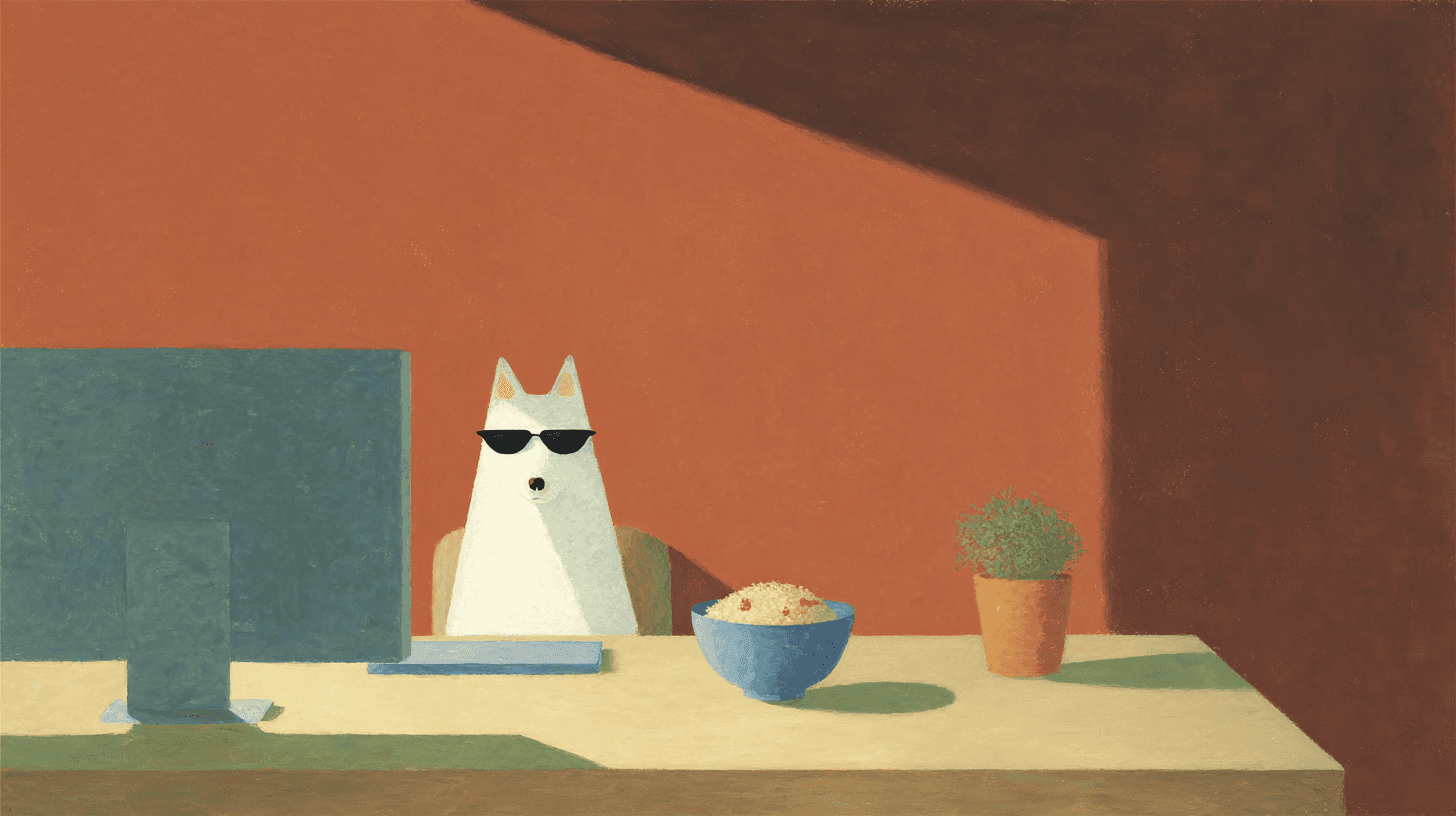
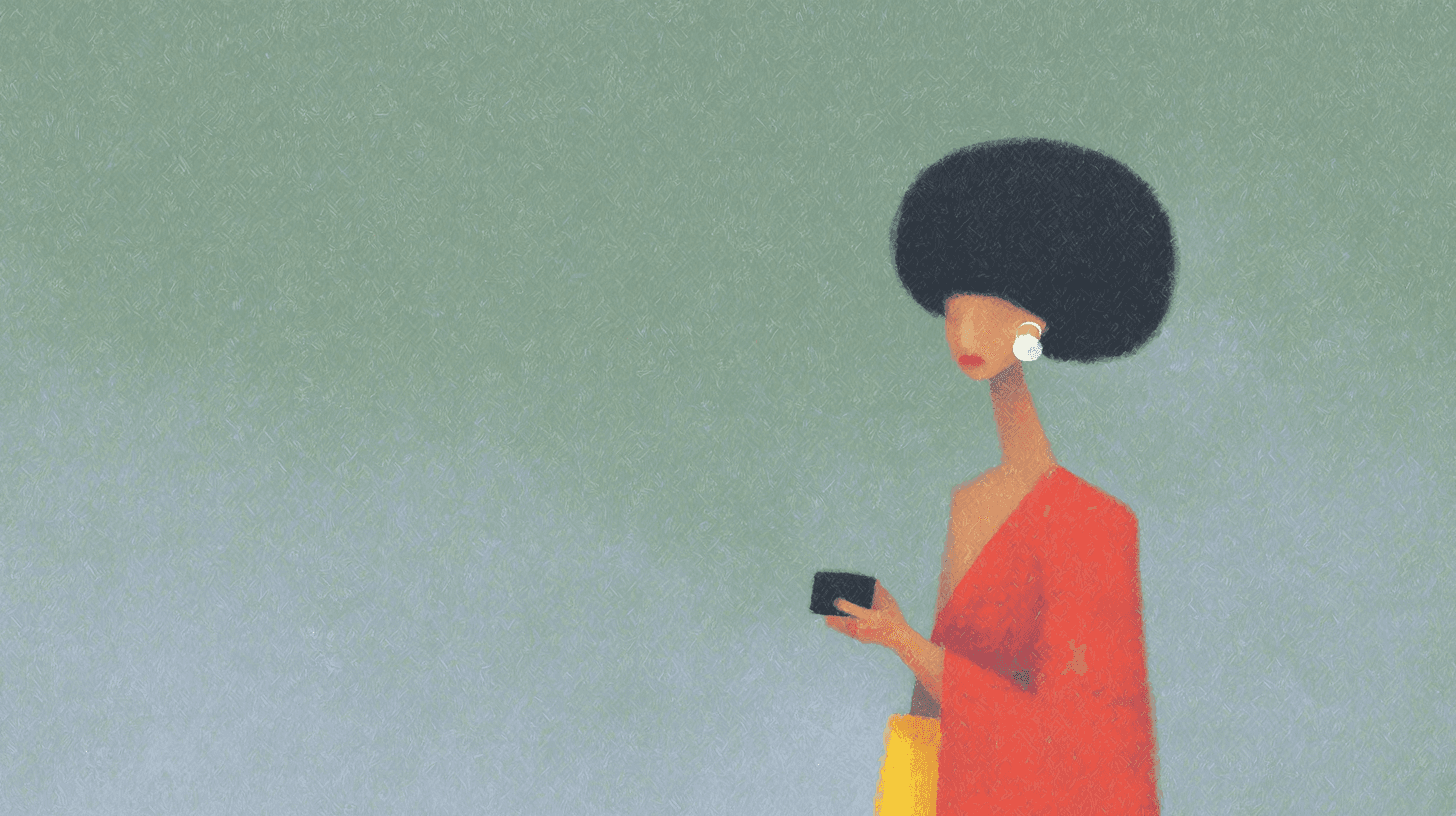
There's a popular saying I often bring up when I'm with friends and discussions turn to the vastness of the internet. The adage, which began as a caption for a cartoon drawn in the 1990s, is quite simple: on the internet, nobody knows you're a dog.

It's a simple line that captures the profound truth about the nature of the internet. On the internet, behind a mask of anonymity, you can be whoever you want to be. It's a poignant idea that offers a lesson in choosing mind over matter but when pushed to its extremes, it also means you can pretend to be someone else.

American comedian Dave Chappelle, during an appearance on The Tonight Show, shared a story about a parody Twitter account impersonating him. The account had been posting disparaging remarks about fellow comedian Katt Williams, prompting a sharp and hurtful response from what appeared to be Katt Williams' account. When Chappelle later ran into him at a comedy show, he approached and explained politely that he didn't have a Twitter account. To his surprise, Williams responded indifferently with a dismissive, "So what?" revealing that he didn't have a Twitter account either.

The anonymity of the internet provides a cover for great heroic deeds but it would be insincere of me not to acknowledge the other side, where villains thrive. Still, that darker potential shouldn't discredit the other reality: that anonymity can be protective, even redemptive. These spaces, messy, often chaotic, and sometimes dangerous, are nonetheless necessary. They remind us that the internet is not inherently good or evil; it is a reflection of us. When we ask ourselves why the world so often ends up in the hands of corrupt leaders, the trail of blame leads uncomfortably back to us. We became the kind of people who punished the principled for being imperfect and excused the shameless for never pretending to care. We hold the principled to unachievable standards, while we excuse the shameless for their lack of pretense. In doing so, we punish sincerity and reward spectacle.

Our first task in redeeming ourselves from culpability will be to ground our frames of thinking about the problems we face and their solutions in today's reality. We are here now, not in the imagined purity of the past nor the seductive certainty of some distant future. The problems we face demand that we see the world as it is, not as we wish it to be. In today's global order, we're witnessing those in authority actively shape public reality, silencing dissent, distorting facts, and criminalizing difference. From Gaza to Sudan, El Salvador to Tanzania, a common tactic emerges: the perpetrators of injustice positioning themselves as the exclusive arbiters of truth.

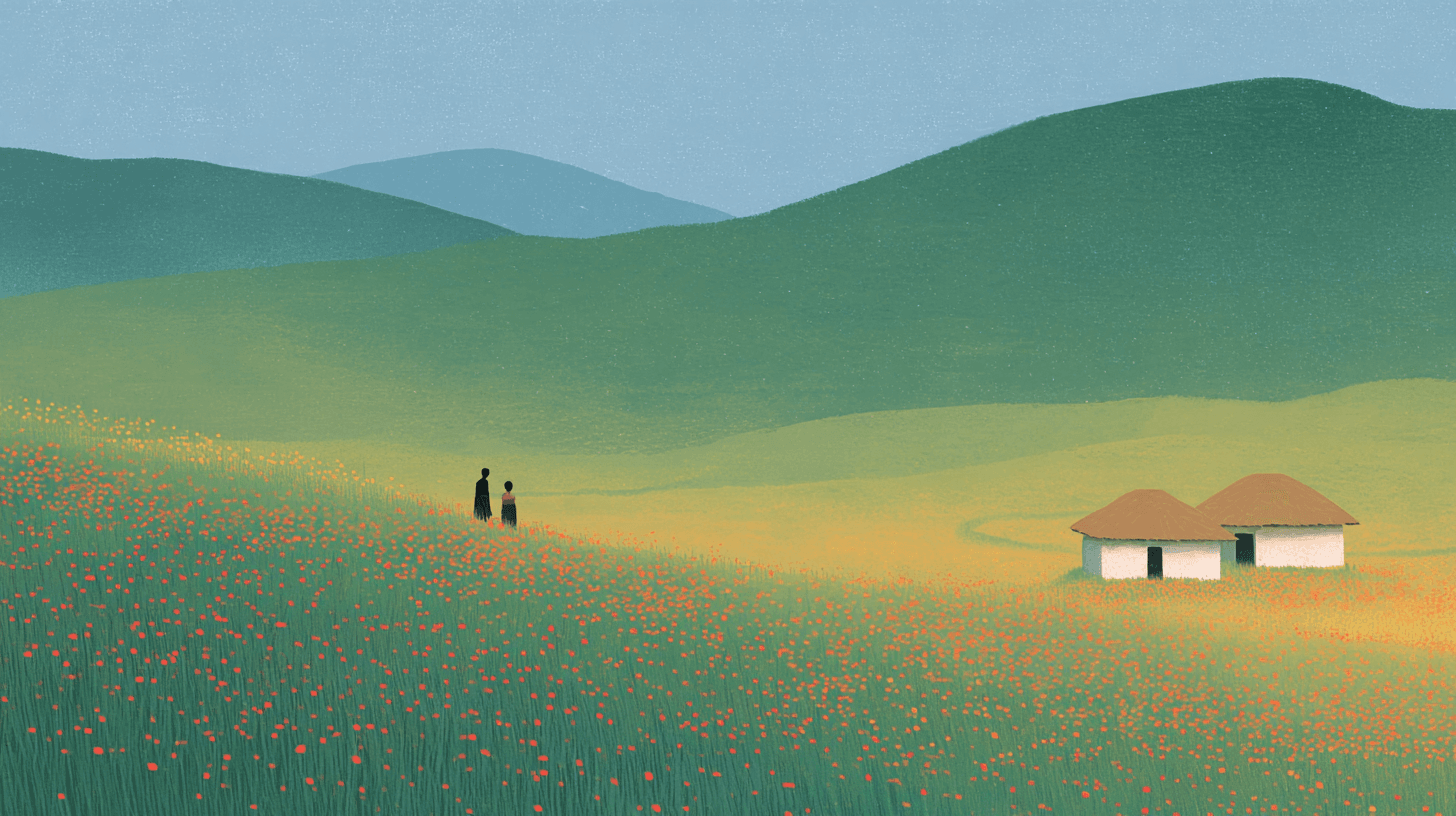
I first met Gabriel Mavuu on a sunny July afternoon at his home in Murang'a. Green Napier grass dotted the compound. Banana leaves rustled softly, and somewhere beyond the compound, children laughed, the kind of laughter that disappears as quickly as it arrives.

Mavuu was sitting in a well-worn one-seater, angled slightly toward a window whose curtains had been tucked behind the metal burglar-proofing. Light streamed in across his face and into the room. Next to him, on a wooden stool, was a metallic cup half-full of brown millet uji (porridge), still faintly steaming.

He wore a neatly pressed white shirt, beige suit trousers, and scuffed black oxfords that had seen years but carried their age well. His walking stick leaned against the wall within reach, worn smooth, with a visible groove where his hand had rested most often. His skin was freckled, his teeth still strong. A full white mustache sat above his upper lip, matching the thick white hair that crowned his head.

He looked up as I entered, his expression unreadable but not unkind. At 87, he moved slowly. But there was something about his stillness that made you slow down too.

A retired war veteran and former teacher from the 1970s, he lives in a modest brick house at the centre of a five-acre family homestead. His children, grandchildren, and great-grandchildren have built lives around him, some in nearby towns, some here, on the land he once tilled.

But even in this quiet, Mavuu is uneasy.

He tells me, in a voice low and deliberate, that the world is sliding into something dark again. He feels it in his bones, the same way he did in the 1950s, during Kenya's struggle for independence.

"Kwi na mwituko wi kuo rieraini… uroka na andu me na mbesha na kompyuta ici murahuthira."

There's a kind of chaos in the air, he says. But this time, "it's dressed in flashy suits and technology."

To him, the tension is familiar. A pressure in the air. The way people look over their shoulders. The quiet dread that comes when the rules start to change in silence. When truth becomes incitement. When asking for justice is framed as destabilizing.

We sit for a while like that, in the kind of silence that doesn't need to be filled. Through the window, he watches the red-earth path that snakes through the compound. Late afternoon light slants across the rooftops.

Then, after a long pause, he leans in.

"There was a week," he says, "not long ago, maybe June, when I felt something heavy come over me. It made me sick for a few days. My eldest son even threatened to take away the television. I like to watch the news."

He smiles briefly. "Muiruri worries too much."

He witnessed the shooting of young Kenyans in the streets that week.

"Children," he says. "Killed. For saying the government was stealing their future."

He doesn't raise his voice. He doesn't need to.

He pauses, then shakes his head slowly. "And then I saw some images from Gaza. Children being pulled from rubble." His voice catches, not with sentimentality, but with something harder. A kind of fury that age hasn't dulled. "It was like watching 1950s Kenya again, but worse. And far away. And nothing I could do." He doesn't dwell on Gaza for long.

"I used to hear people talk about privacy," Mavuu says, eyes still on the ground. "Digital privacy and all that. It sounded like privileged noise. These are things that idle people, who have a lot to hide, might enjoy." He breathes in through his nose, slowly. "But then people started disappearing."

He says it plainly. No drama, no emphasis. He then lifts the cup placed on the stool, sips some porridge and continues.

"You'd see someone on TV or hear them on the radio. A student, a human rights person, or just someone who marched in a protest. And then two days later, their family is on Kameme (the radio) begging for answers. And the police? 'We're not aware of such a person.'"

He shifts in his chair. "Then I heard it was the phone. The phone they were using. The companies provided their location to DCI. They could follow the children down to the street corner. Imagine that."

He goes quiet for a while. Then, not looking at me, he says, "I support those kids. Not because they shout, but because they don't destroy. Because they want what's fair."

Another long pause, then he continues, "But they need to last. That's what they don't always see. You can't win if you're not around when the winning happens."

"They want you loud sometimes," he adds. "So they know where to find you. But if you're wise, you learn to move like smoke. Speak only when it counts. That's how we survived."

I didn't know what to say after that. There was no response that wouldn't sound smaller than what he'd just given me. So I just nodded.

We sat for a while, undisturbed. A radio played faintly somewhere across the compound. The day had started to fold into itself, the light softer now, the shadows longer.

I kept thinking about the word Mavuu had used. Smoke. It hovers in the air for a brief moment, marking the passage of time. The way it escapes without warning. The way it obscures more than it reveals. It felt far from the world we've made online, where everything is visible, archived, and expected to be explained.

Mavuu never said the word "anonymity." But I think that's what he was circling. The instinct to protect a part of oneself is powerful. To know when not to be seen. It was not exactly strategy, as we understand it now. It was survival, learned over decades. A habit of quiet speech.

It reminded me of what's happening elsewhere: activists imprisoned in Tanzania for supporting the wrong side, Sudanese civilians broadcasting the truth in fragments before signal disappears, Palestinians filming goodbyes in case they don't see another morning. And even here, in Nairobi, where speaking out can mean your name makes a list, and your face ends up on a missing person poster. The world no longer makes space for those who speak truth to power, not without consequence. Whether it's a whistleblower exposing corporate greed, an activist challenging state brutality, or a journalist asking the wrong question, the outcome is often the same: silencing, exile, or a sudden, unexplained absence. The machinery of suppression may have become less visible, but it is no less brutal. And yet, the fight goes on. It has to. Because surrendering to despair only guarantees more of the same. The moment you believe there's nothing left to do is the moment the worst people win.

Not All Resistance Looks Like a Raised Fist

What Mavuu said sat with me long after I left. His words were a quiet reminder that not all resistance looks like a raised fist. Sometimes, the clearest way to make a meaningful impact is from the shadows because not every movement needs a face and not every truth survives the spotlight. Maybe that's why leaderless movements endure, not despite their anonymity, but because of it. Smoke moves, after all. Even when no one sees it.
Article Summary & Transcript

summary

This piece weaves a conversation with 87-year-old Kenyan war veteran Gabriel Mavuu into a meditation on anonymity, resistance, and digital privacy. Beginning with the internet's capacity for reinvention, the author grounds the discussion in today's political reality — where dissent is criminalized from Gaza to Nairobi. Through Mavuu's lived experience of colonial struggle and his witnessing of Gen Z protests, the piece argues that meaningful resistance doesn't always require visibility. Sometimes survival demands moving "like smoke" — unseen, deliberate, and enduring — a quiet defiance the digital age urgently needs.

Article

Entry

0

0

32

Feb 26, 2026

0:00/1:34

  • On the Internet Nobody Knows You're a Dog

    by

    Muiruri Beautah

There's a popular saying I often bring up when I'm with friends and discussions turn to the vastness of the internet. The adage, which began as a caption for a cartoon drawn in the 1990s, is quite simple: on the internet, nobody knows you're a dog.

It's a simple line that captures the profound truth about the nature of the internet. On the internet, behind a mask of anonymity, you can be whoever you want to be. It's a poignant idea that offers a lesson in choosing mind over matter but when pushed to its extremes, it also means you can pretend to be someone else.

American comedian Dave Chappelle, during an appearance on The Tonight Show, shared a story about a parody Twitter account impersonating him. The account had been posting disparaging remarks about fellow comedian Katt Williams, prompting a sharp and hurtful response from what appeared to be Katt Williams' account. When Chappelle later ran into him at a comedy show, he approached and explained politely that he didn't have a Twitter account. To his surprise, Williams responded indifferently with a dismissive, "So what?" revealing that he didn't have a Twitter account either.

The anonymity of the internet provides a cover for great heroic deeds but it would be insincere of me not to acknowledge the other side, where villains thrive. Still, that darker potential shouldn't discredit the other reality: that anonymity can be protective, even redemptive. These spaces, messy, often chaotic, and sometimes dangerous, are nonetheless necessary. They remind us that the internet is not inherently good or evil; it is a reflection of us. When we ask ourselves why the world so often ends up in the hands of corrupt leaders, the trail of blame leads uncomfortably back to us. We became the kind of people who punished the principled for being imperfect and excused the shameless for never pretending to care. We hold the principled to unachievable standards, while we excuse the shameless for their lack of pretense. In doing so, we punish sincerity and reward spectacle.

Our first task in redeeming ourselves from culpability will be to ground our frames of thinking about the problems we face and their solutions in today's reality. We are here now, not in the imagined purity of the past nor the seductive certainty of some distant future. The problems we face demand that we see the world as it is, not as we wish it to be. In today's global order, we're witnessing those in authority actively shape public reality, silencing dissent, distorting facts, and criminalizing difference. From Gaza to Sudan, El Salvador to Tanzania, a common tactic emerges: the perpetrators of injustice positioning themselves as the exclusive arbiters of truth.

I first met Gabriel Mavuu on a sunny July afternoon at his home in Murang'a. Green Napier grass dotted the compound. Banana leaves rustled softly, and somewhere beyond the compound, children laughed, the kind of laughter that disappears as quickly as it arrives.

Mavuu was sitting in a well-worn one-seater, angled slightly toward a window whose curtains had been tucked behind the metal burglar-proofing. Light streamed in across his face and into the room. Next to him, on a wooden stool, was a metallic cup half-full of brown millet uji (porridge), still faintly steaming.

He wore a neatly pressed white shirt, beige suit trousers, and scuffed black oxfords that had seen years but carried their age well. His walking stick leaned against the wall within reach, worn smooth, with a visible groove where his hand had rested most often. His skin was freckled, his teeth still strong. A full white mustache sat above his upper lip, matching the thick white hair that crowned his head.

He looked up as I entered, his expression unreadable but not unkind. At 87, he moved slowly. But there was something about his stillness that made you slow down too.

A retired war veteran and former teacher from the 1970s, he lives in a modest brick house at the centre of a five-acre family homestead. His children, grandchildren, and great-grandchildren have built lives around him, some in nearby towns, some here, on the land he once tilled.

But even in this quiet, Mavuu is uneasy.

He tells me, in a voice low and deliberate, that the world is sliding into something dark again. He feels it in his bones, the same way he did in the 1950s, during Kenya's struggle for independence.

"Kwi na mwituko wi kuo rieraini… uroka na andu me na mbesha na kompyuta ici murahuthira."

There's a kind of chaos in the air, he says. But this time, "it's dressed in flashy suits and technology."

To him, the tension is familiar. A pressure in the air. The way people look over their shoulders. The quiet dread that comes when the rules start to change in silence. When truth becomes incitement. When asking for justice is framed as destabilizing.

We sit for a while like that, in the kind of silence that doesn't need to be filled. Through the window, he watches the red-earth path that snakes through the compound. Late afternoon light slants across the rooftops.

Then, after a long pause, he leans in.

"There was a week," he says, "not long ago, maybe June, when I felt something heavy come over me. It made me sick for a few days. My eldest son even threatened to take away the television. I like to watch the news."

He smiles briefly. "Muiruri worries too much."

He witnessed the shooting of young Kenyans in the streets that week.

"Children," he says. "Killed. For saying the government was stealing their future."

He doesn't raise his voice. He doesn't need to.

He pauses, then shakes his head slowly. "And then I saw some images from Gaza. Children being pulled from rubble." His voice catches, not with sentimentality, but with something harder. A kind of fury that age hasn't dulled. "It was like watching 1950s Kenya again, but worse. And far away. And nothing I could do." He doesn't dwell on Gaza for long.

"I used to hear people talk about privacy," Mavuu says, eyes still on the ground. "Digital privacy and all that. It sounded like privileged noise. These are things that idle people, who have a lot to hide, might enjoy." He breathes in through his nose, slowly. "But then people started disappearing."

He says it plainly. No drama, no emphasis. He then lifts the cup placed on the stool, sips some porridge and continues.

"You'd see someone on TV or hear them on the radio. A student, a human rights person, or just someone who marched in a protest. And then two days later, their family is on Kameme (the radio) begging for answers. And the police? 'We're not aware of such a person.'"

He shifts in his chair. "Then I heard it was the phone. The phone they were using. The companies provided their location to DCI. They could follow the children down to the street corner. Imagine that."

He goes quiet for a while. Then, not looking at me, he says, "I support those kids. Not because they shout, but because they don't destroy. Because they want what's fair."

Another long pause, then he continues, "But they need to last. That's what they don't always see. You can't win if you're not around when the winning happens."

"They want you loud sometimes," he adds. "So they know where to find you. But if you're wise, you learn to move like smoke. Speak only when it counts. That's how we survived."

I didn't know what to say after that. There was no response that wouldn't sound smaller than what he'd just given me. So I just nodded.

We sat for a while, undisturbed. A radio played faintly somewhere across the compound. The day had started to fold into itself, the light softer now, the shadows longer.

I kept thinking about the word Mavuu had used. Smoke. It hovers in the air for a brief moment, marking the passage of time. The way it escapes without warning. The way it obscures more than it reveals. It felt far from the world we've made online, where everything is visible, archived, and expected to be explained.

Mavuu never said the word "anonymity." But I think that's what he was circling. The instinct to protect a part of oneself is powerful. To know when not to be seen. It was not exactly strategy, as we understand it now. It was survival, learned over decades. A habit of quiet speech.

It reminded me of what's happening elsewhere: activists imprisoned in Tanzania for supporting the wrong side, Sudanese civilians broadcasting the truth in fragments before signal disappears, Palestinians filming goodbyes in case they don't see another morning. And even here, in Nairobi, where speaking out can mean your name makes a list, and your face ends up on a missing person poster. The world no longer makes space for those who speak truth to power, not without consequence. Whether it's a whistleblower exposing corporate greed, an activist challenging state brutality, or a journalist asking the wrong question, the outcome is often the same: silencing, exile, or a sudden, unexplained absence. The machinery of suppression may have become less visible, but it is no less brutal. And yet, the fight goes on. It has to. Because surrendering to despair only guarantees more of the same. The moment you believe there's nothing left to do is the moment the worst people win.

Not All Resistance Looks Like a Raised Fist

What Mavuu said sat with me long after I left. His words were a quiet reminder that not all resistance looks like a raised fist. Sometimes, the clearest way to make a meaningful impact is from the shadows because not every movement needs a face and not every truth survives the spotlight. Maybe that's why leaderless movements endure, not despite their anonymity, but because of it. Smoke moves, after all. Even when no one sees it.
Article Summary & Transcript

summary

This piece weaves a conversation with 87-year-old Kenyan war veteran Gabriel Mavuu into a meditation on anonymity, resistance, and digital privacy. Beginning with the internet's capacity for reinvention, the author grounds the discussion in today's political reality — where dissent is criminalized from Gaza to Nairobi. Through Mavuu's lived experience of colonial struggle and his witnessing of Gen Z protests, the piece argues that meaningful resistance doesn't always require visibility. Sometimes survival demands moving "like smoke" — unseen, deliberate, and enduring — a quiet defiance the digital age urgently needs.

Article

Entry

0

0

32

Feb 26, 2026

0:00/1:34

  • On the Internet Nobody Knows You're a Dog

    by

    Muiruri Beautah

There's a popular saying I often bring up when I'm with friends and discussions turn to the vastness of the internet. The adage, which began as a caption for a cartoon drawn in the 1990s, is quite simple: on the internet, nobody knows you're a dog.

It's a simple line that captures the profound truth about the nature of the internet. On the internet, behind a mask of anonymity, you can be whoever you want to be. It's a poignant idea that offers a lesson in choosing mind over matter but when pushed to its extremes, it also means you can pretend to be someone else.

American comedian Dave Chappelle, during an appearance on The Tonight Show, shared a story about a parody Twitter account impersonating him. The account had been posting disparaging remarks about fellow comedian Katt Williams, prompting a sharp and hurtful response from what appeared to be Katt Williams' account. When Chappelle later ran into him at a comedy show, he approached and explained politely that he didn't have a Twitter account. To his surprise, Williams responded indifferently with a dismissive, "So what?" revealing that he didn't have a Twitter account either.

The anonymity of the internet provides a cover for great heroic deeds but it would be insincere of me not to acknowledge the other side, where villains thrive. Still, that darker potential shouldn't discredit the other reality: that anonymity can be protective, even redemptive. These spaces, messy, often chaotic, and sometimes dangerous, are nonetheless necessary. They remind us that the internet is not inherently good or evil; it is a reflection of us. When we ask ourselves why the world so often ends up in the hands of corrupt leaders, the trail of blame leads uncomfortably back to us. We became the kind of people who punished the principled for being imperfect and excused the shameless for never pretending to care. We hold the principled to unachievable standards, while we excuse the shameless for their lack of pretense. In doing so, we punish sincerity and reward spectacle.

Our first task in redeeming ourselves from culpability will be to ground our frames of thinking about the problems we face and their solutions in today's reality. We are here now, not in the imagined purity of the past nor the seductive certainty of some distant future. The problems we face demand that we see the world as it is, not as we wish it to be. In today's global order, we're witnessing those in authority actively shape public reality, silencing dissent, distorting facts, and criminalizing difference. From Gaza to Sudan, El Salvador to Tanzania, a common tactic emerges: the perpetrators of injustice positioning themselves as the exclusive arbiters of truth.

I first met Gabriel Mavuu on a sunny July afternoon at his home in Murang'a. Green Napier grass dotted the compound. Banana leaves rustled softly, and somewhere beyond the compound, children laughed, the kind of laughter that disappears as quickly as it arrives.

Mavuu was sitting in a well-worn one-seater, angled slightly toward a window whose curtains had been tucked behind the metal burglar-proofing. Light streamed in across his face and into the room. Next to him, on a wooden stool, was a metallic cup half-full of brown millet uji (porridge), still faintly steaming.

He wore a neatly pressed white shirt, beige suit trousers, and scuffed black oxfords that had seen years but carried their age well. His walking stick leaned against the wall within reach, worn smooth, with a visible groove where his hand had rested most often. His skin was freckled, his teeth still strong. A full white mustache sat above his upper lip, matching the thick white hair that crowned his head.

He looked up as I entered, his expression unreadable but not unkind. At 87, he moved slowly. But there was something about his stillness that made you slow down too.

A retired war veteran and former teacher from the 1970s, he lives in a modest brick house at the centre of a five-acre family homestead. His children, grandchildren, and great-grandchildren have built lives around him, some in nearby towns, some here, on the land he once tilled.

But even in this quiet, Mavuu is uneasy.

He tells me, in a voice low and deliberate, that the world is sliding into something dark again. He feels it in his bones, the same way he did in the 1950s, during Kenya's struggle for independence.

"Kwi na mwituko wi kuo rieraini… uroka na andu me na mbesha na kompyuta ici murahuthira."

There's a kind of chaos in the air, he says. But this time, "it's dressed in flashy suits and technology."

To him, the tension is familiar. A pressure in the air. The way people look over their shoulders. The quiet dread that comes when the rules start to change in silence. When truth becomes incitement. When asking for justice is framed as destabilizing.

We sit for a while like that, in the kind of silence that doesn't need to be filled. Through the window, he watches the red-earth path that snakes through the compound. Late afternoon light slants across the rooftops.

Then, after a long pause, he leans in.

"There was a week," he says, "not long ago, maybe June, when I felt something heavy come over me. It made me sick for a few days. My eldest son even threatened to take away the television. I like to watch the news."

He smiles briefly. "Muiruri worries too much."

He witnessed the shooting of young Kenyans in the streets that week.

"Children," he says. "Killed. For saying the government was stealing their future."

He doesn't raise his voice. He doesn't need to.

He pauses, then shakes his head slowly. "And then I saw some images from Gaza. Children being pulled from rubble." His voice catches, not with sentimentality, but with something harder. A kind of fury that age hasn't dulled. "It was like watching 1950s Kenya again, but worse. And far away. And nothing I could do." He doesn't dwell on Gaza for long.

"I used to hear people talk about privacy," Mavuu says, eyes still on the ground. "Digital privacy and all that. It sounded like privileged noise. These are things that idle people, who have a lot to hide, might enjoy." He breathes in through his nose, slowly. "But then people started disappearing."

He says it plainly. No drama, no emphasis. He then lifts the cup placed on the stool, sips some porridge and continues.

"You'd see someone on TV or hear them on the radio. A student, a human rights person, or just someone who marched in a protest. And then two days later, their family is on Kameme (the radio) begging for answers. And the police? 'We're not aware of such a person.'"

He shifts in his chair. "Then I heard it was the phone. The phone they were using. The companies provided their location to DCI. They could follow the children down to the street corner. Imagine that."

He goes quiet for a while. Then, not looking at me, he says, "I support those kids. Not because they shout, but because they don't destroy. Because they want what's fair."

Another long pause, then he continues, "But they need to last. That's what they don't always see. You can't win if you're not around when the winning happens."

"They want you loud sometimes," he adds. "So they know where to find you. But if you're wise, you learn to move like smoke. Speak only when it counts. That's how we survived."

I didn't know what to say after that. There was no response that wouldn't sound smaller than what he'd just given me. So I just nodded.

We sat for a while, undisturbed. A radio played faintly somewhere across the compound. The day had started to fold into itself, the light softer now, the shadows longer.

I kept thinking about the word Mavuu had used. Smoke. It hovers in the air for a brief moment, marking the passage of time. The way it escapes without warning. The way it obscures more than it reveals. It felt far from the world we've made online, where everything is visible, archived, and expected to be explained.

Mavuu never said the word "anonymity." But I think that's what he was circling. The instinct to protect a part of oneself is powerful. To know when not to be seen. It was not exactly strategy, as we understand it now. It was survival, learned over decades. A habit of quiet speech.

It reminded me of what's happening elsewhere: activists imprisoned in Tanzania for supporting the wrong side, Sudanese civilians broadcasting the truth in fragments before signal disappears, Palestinians filming goodbyes in case they don't see another morning. And even here, in Nairobi, where speaking out can mean your name makes a list, and your face ends up on a missing person poster. The world no longer makes space for those who speak truth to power, not without consequence. Whether it's a whistleblower exposing corporate greed, an activist challenging state brutality, or a journalist asking the wrong question, the outcome is often the same: silencing, exile, or a sudden, unexplained absence. The machinery of suppression may have become less visible, but it is no less brutal. And yet, the fight goes on. It has to. Because surrendering to despair only guarantees more of the same. The moment you believe there's nothing left to do is the moment the worst people win.

Not All Resistance Looks Like a Raised Fist

What Mavuu said sat with me long after I left. His words were a quiet reminder that not all resistance looks like a raised fist. Sometimes, the clearest way to make a meaningful impact is from the shadows because not every movement needs a face and not every truth survives the spotlight. Maybe that's why leaderless movements endure, not despite their anonymity, but because of it. Smoke moves, after all. Even when no one sees it.