Article
Entry
0
13
Jan 22, 2026
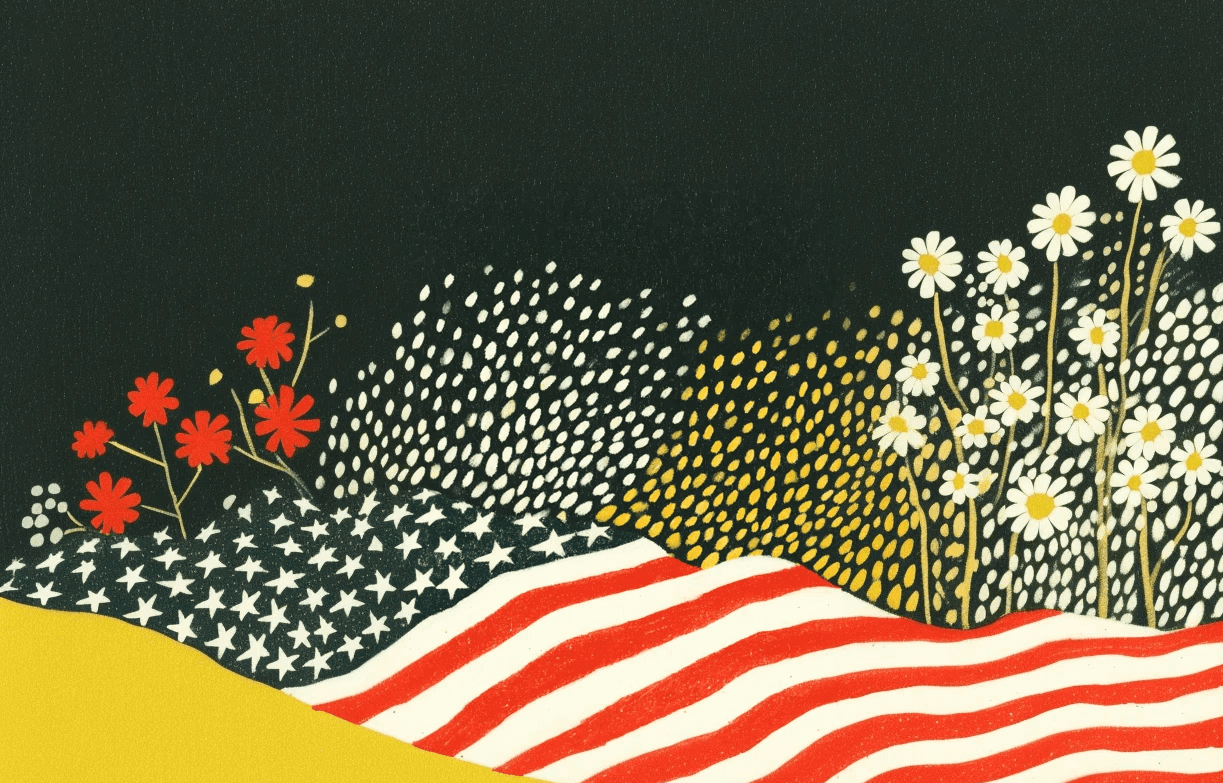
Growing up, I would be speaking for many when I say we all looked to American ideals as a bastion of what could be. Cultivated within the post-colonial British system, there was an unspoken collective decision that due to the nature of our colonial masters' past, America was the best alternative. The 'lesser' empire, maybe, but arrogance can be attractive when dressed as confidence.
From this lens, the myth they sold the world was an enticing one: the principles of hope, liberty, freedom for all, progress for the 'greater good', and, fuck it, you could even get disgustingly rich if you played along.
There was a brief—albeit very, very brief—moment in the 90s where all was possible. American Entertainment dominated, Clintonomics ushered the kind of balanced fiscal spending many could only dream of, and the beginning of technological anarchy fuelled by dot-com aspirees. The American lifestyle officially became secular gospel. 'Merica: born in the womb of Britain, now ready to pillage its Eden as a show of earned dominance.
At least that's what it seemed on the tele.
For those of us born outside the belly of the beast, the reason we have responded to its recent sidesteps as a deeply esoteric moral dilemma comes down to a hurtful truth: we became enamoured with the performance of ideals, not the implementation of them.
And the hope was refreshing.
Mirages serve a purpose if studied close enough. They give us something to reach toward, something to believe in, even if the destination was merely a myth. How could you not believe in such a rebellion in service of progress? Steve Jobs got up on that stage and represented all that America had to offer: a Syrian-born orphan taken under the wings of the eagle, nurtured into a cosmic architect who didn't just represent American innovation, but rewrote what was possible. THAT was the American dream. For me at least.
So where did the myth fracture?
In hindsight, what did we expect? Every frame was cautiously manufactured. News anchors on curated sets with rehearsed talking points. Films lit to perfection, characters reciting scripted words designed to convince us that their actions, though illegal for others, were justified in the name of a loosely defined 'greater good'.
We aren't innocent. We sang along as the pied piper played. Melodies so disarming we never thought to question them. Credit where credit is due: the precision was marvellously surgical.
Yet still, the images we received of their myth were always vastly different from the ones they saw themselves.
Then 2010 arrived, and for the keen observers among us, there was a collective sense that the ground was shifting. Subtle. A slow chill creeping up the spine as you walk past a dark alley. Good? Not sure. Bad? Maybe. Unsettling? You bet.
The response? America did what America has learnt to do best: distract. Social media went mainstream, cat videos became liturgy, iPhone screens snatched our attention spans in the heist of the century, and Ryan Seacrest-produced reality TV spread like a rash after a rather questionable evening.
But the distraction backfired.
For the first time, those of us watching from the outside began to see behind the production—and what we saw was a country no more mature than any other. Just another nation convinced it was the host at a party it had merely been invited to.
So now, imagine a grief that weighs you down: the realization that the gift you believed in was a Trojan all along. That the alternative to your colonial inheritance is just another country scrambling for the very same answers our third-world countries are, albeit dressed a little nicer. The surgical images, the manufactured dream, the spectacle that seduced you for decades—all of it, a stage. You, the audience.
Maybe what we're seeing now is the real America. The one without the performance. The horror the audience feels as the curtain falls, as actors break character to yell profanity at those who came to hear sweet melodies of liberty and freedom, and progress for the 'greater good'. But worse still: the realization that they were never acting. The character was the restraint. What remains is just as flawed as anywhere else. Perhaps more.
America is dead. At least the idea of itself we wanted to believe. What's left is simply a country. And countries, as it turns out, are just people—no more, no less capable of cruelty or kindness than the rest of us.
K.A. Nortey, combines a global perspective with introspective thinking. Passionate about storytelling, he aspires to aid in the cultivation of thought-provoking ideas which inspires readers to engage deeply with the world and her perspectives.
Discover More
When You Are the Migration They Fear: Writing from the Inside of the Debate
written by
Aileen Waitaaga Kimuhu
From the Global South to the Tory Frontbench: A Perspective on Kemi’s Narrative
written by
Aileen Waitaaga Kimuhu

Performing Belonging: The Diasporic Paradox of Cultural Diversity Week
written by
Aileen Waitaaga Kimuhu
What the UK Riots Meant To Me
written by
Eljae

The Nigerian Protests: An Exercise in Futility
written by
Yewande

African Excellence is Tiring, Can We Rest?
written by
Aileen Waitaaga Kimuhu