Kenya's mitumba dependence stifles local textiles; gradual reform beats outright bans for lasting change.
related links
View Contributor
Second-hand clothing imports, commonly known as mitumba, have become an entrenched part of many African economies, including Kenya. While these imports are affordable and provide a livelihood for many, they come with complex economic consequences. The trade of second-hand clothes has created a paradox: it helps alleviate immediate poverty by providing low-cost clothing options but undermines local industries, specifically the textile and garment sectors. This piece aims to investigate the economic costs of mitumba imports on local industry, with a keen focus on Kenya, while evaluating the Buy Kenya Build Kenya policy framework and its role in safeguarding the Kenya textile industry.
Second-Hand Clothing Trade in Kenya: A Growing Phenomenon
Wearing second-hand clothing — affectionately known as mitumba — is far from a novel trend. It's been rebranded as "thrifted" and, while it's often praised for its sustainability, the execution leaves much to be desired. In Kenya, mitumba is so deeply embedded in the economy that life without it feels unimaginable, providing over 1.3 million jobs.
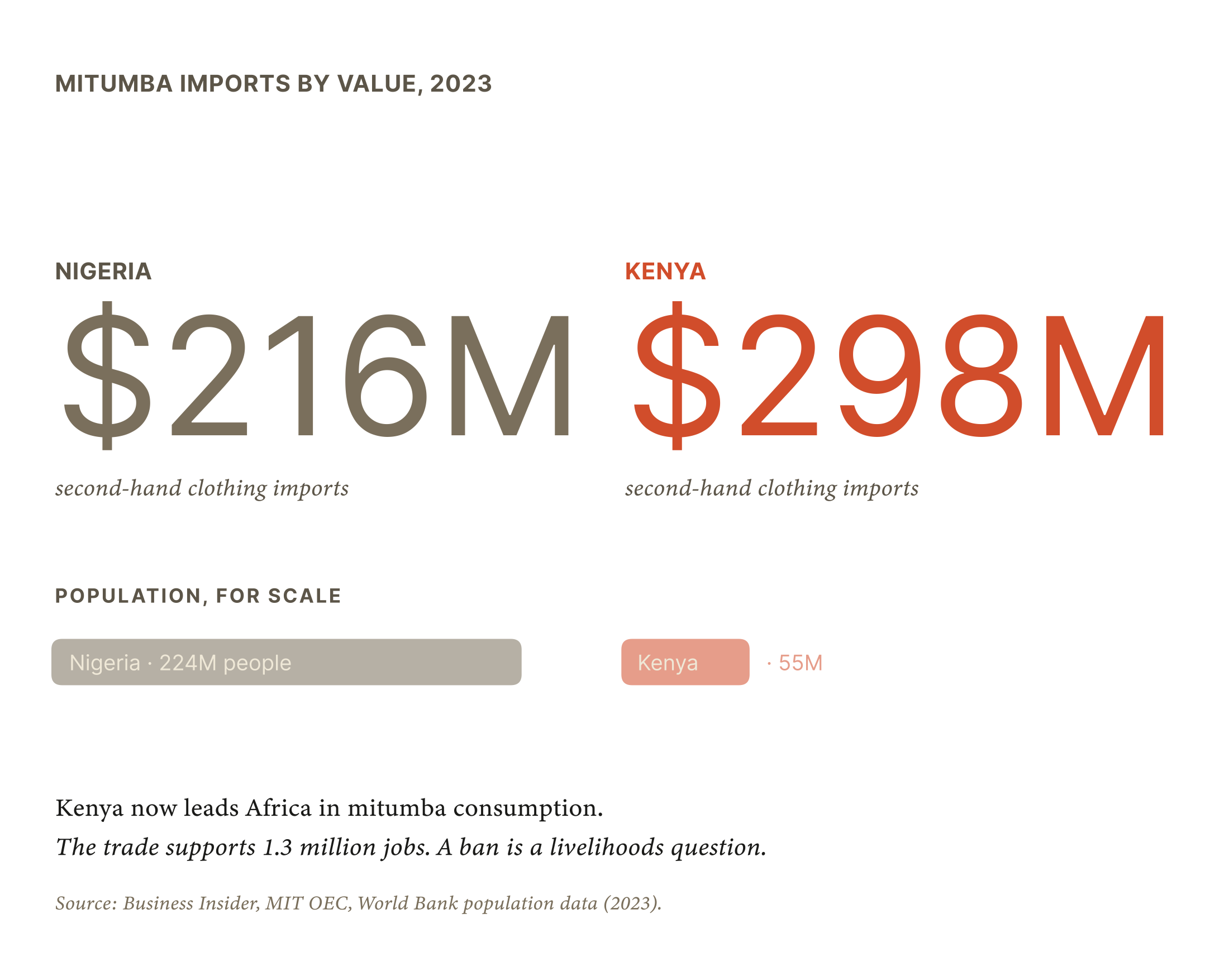
According to a Business Insider recent article, Kenya imports second hand clothing and textiles valued at $298 million in 2023, surpassing four-time more populated Nigeria as the leading buyer of mitumba in Africa. It's cheap, practical, and supports the livelihoods of countless traders. But, beneath the surface, it's also stifling local industries — particularly textiles and garments. The trade of second hand clothing has created a paradox. For one, it helps alleviate immediate poverty by providing low cost business options for traders as well as affordable clothing. However, it undermines local industries, specifically the textile and garment sector and thus poses a substantive threat to the promise of increased local consumption of "Made in Kenya" through the Buy Kenya Build Kenya (BKBK) initiative.
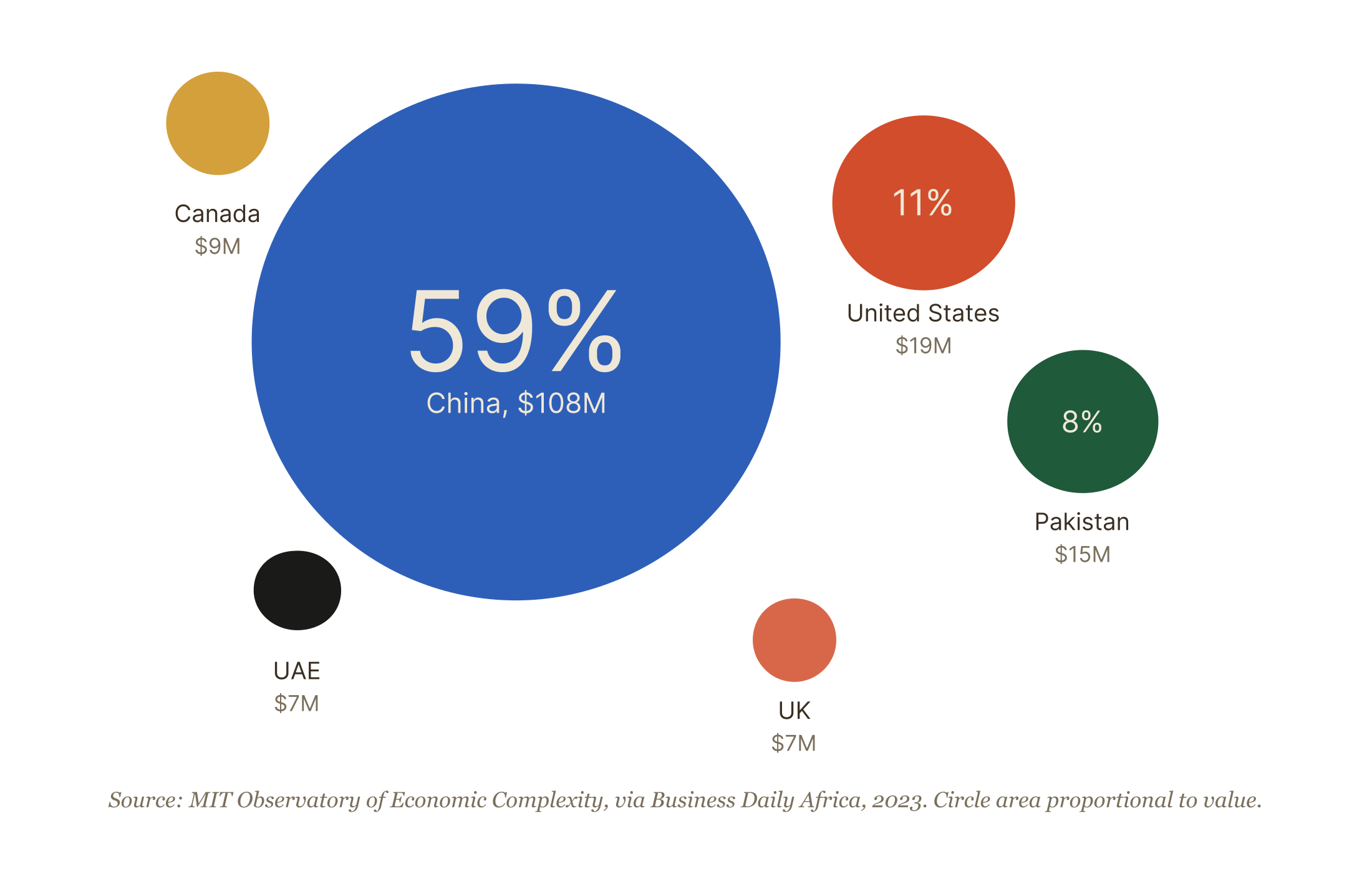
In 2022 alone, Kenya imported more than 170,000 tonnes of used clothing, with major suppliers including China, the U.S., Canada, the UK, and the EU.
So, how did Kenya become the region's largest mitumba importer? It started as a solution to provide affordable clothing for the poor and refugees. The quality of second-hand clothes was unbeatable, which fueled the rise of a thriving resale industry. In the 1980s, market liberalization made these imports even more accessible, which — unintentionally — led to the collapse of Kenya's textile sector. By the mid-90s, mitumba had taken over, despite government efforts to reverse the trend.
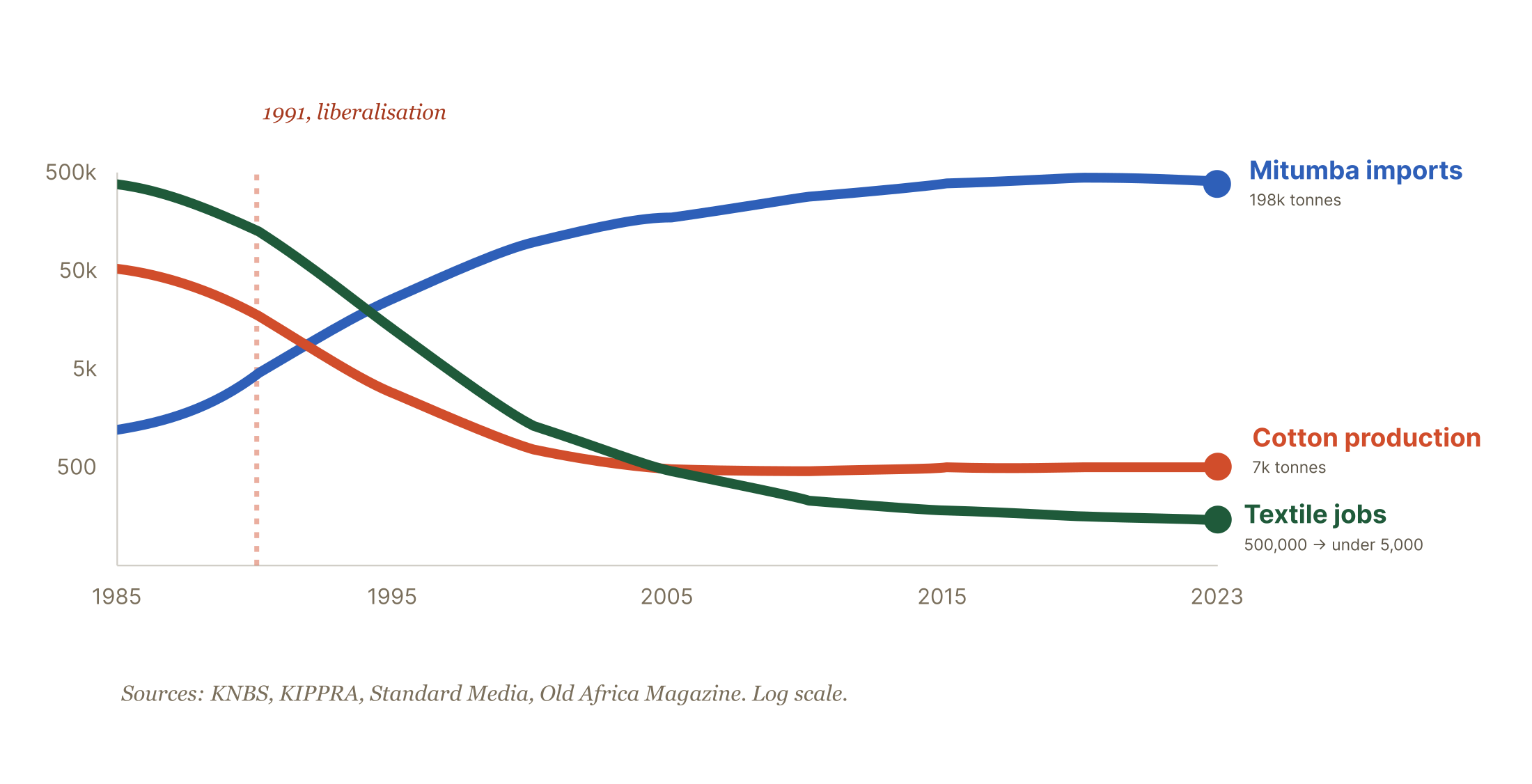
This trend hasn't dwindled. A surge in mitumba imports in 2023 shows that Kenya, over 60 years post-independence, still can't clothe itself. Despite once having a thriving cotton industry capable of producing clothes for global markets, Kenya now faces a dilemma. Even with the shilling's depreciation, consumers continue to flock to affordable mitumba, putting locally made clothes at a disadvantage. While the import trade supports jobs in the resale market, it's costing Kenya the chance to create jobs through local manufacturing.
Kenya's mitumba market is massive, with a vast network of traders and supply chains for importing, transporting, and retailing. Though Kenyan households have a higher average income than many East African neighbors, it still falls short by global standards. With the average Kenyan spending around 40% of their income on food, there's little left for essentials like clothing. This makes affordable mitumba the go-to option.
There have been attempts revitalizing the textile manufacturing sector but with little success achieved. The Big Four Agenda under the broader strategic economic plan of Vision 2030 jumps to the forefront. The agenda was a Kenyan government initiative launched in 2017 that was focused on four pillars (food security, affordable housing, manufacturing, and universal healthcare) by 2022 the agenda fell into the broader Kenyan development program of vision 2030. Under the agenda, the manufacturing pillar aims at transforming the economic livelihoods of its citizens through job creation. This is to be achieved by propelling Kenya into an industrial hub through emphasis on manufacturing, especially in textiles and apparel, as key to economic growth by generating 15% of GDP from manufacturing.
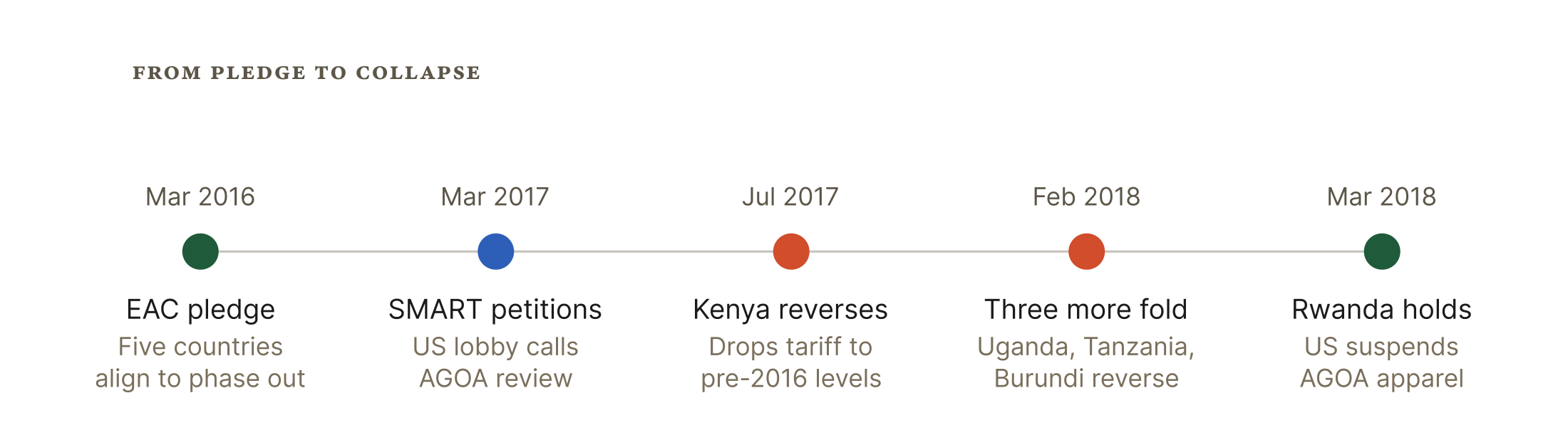
So, why can't Kenya just ban mitumba, you ask? Well, it's not as simple. Back in 2016, five East African countries — Kenya, Uganda, Tanzania, Burundi, and Rwanda — made a bold move to jointly ban the importation of used clothes. The idea, spearheaded by the EAC Council of Ministers, was to give local manufacturing a boost by adopting a regional industrialization policy. The plan? Phase out mitumba imports by 2019 and instead source textiles and footwear locally. The proposal also included reducing used car imports to promote local vehicle assembly and bolster the textile and leather industries. Sounds good, right? But then, swooped in the U.S., and everything went off track.
Under the first Trump administration, the U.S. quickly intervened, launching an out-of-cycle review of Rwanda, Tanzania, and Uganda's eligibility for the African Growth and Opportunity Act (AGOA), which provides duty-free access for certain goods from Africa south of the Sahara. The U.S. was none too pleased with East Africa's plans to phase out imports of used clothing and footwear, arguing it could hurt the American used-clothing industry. In short: How dare you stop us from dumping our old clothes on you? They claimed the East African ban violated AGOA's requirements for market-based economies and free trade with the U.S. As a result, Kenya — along with most other countries — backed down, with the exception of Rwanda. Stating that it shall not undermine the collective decision agreed upon. The Rwandese government holds the view that the prohibition of second hand clothing is a key component in strengthening its textile industry and promoting local manufacturing capacity. According to the BBC, Kenya reaps substantial benefits from AGOA, with exports worth around Ksh. 68 billion ($523 million) in 2017 alone. So, as much as the ban seemed like a great idea, it turns out international trade interests had a lot more sway.
There's a powerful industrial lobby that leans toward the protectionist side of things, and I have to admit: I'm on their side. The long-term benefits of boosting local apparel production — creating jobs and stabilizing the economy — are hard to ignore. And this sentiment ties directly into the BKBK initiative. While there's no official stance from the Kenya Association of Manufacturers (KAM) on banning mitumba, past discussions by the Ministry of Trade and Industry and the Kenya Bureau of Standards (KEBS) have floated the idea. But, as with many good ideas, the path forward is far from simple.
Is Banning Mitumba Elitist?
Gikomba market stands as the heart of second hand clothing trade in Kenya. The area is a bustling labyrinth of temporary booths, tin roofs, and tight alleys filled with energy. Upon entering, you are greeted by the booming calls of vendors eager to make a sale. Moving through the market calls for attention and vigilance, so as not to be swayed by sweet songs beaconing you away from your mission into overpriced stalls with questionable garment quality fondly known as "camera" (meaning new clothes). It is here that mitumba finds a second life, the market hums with activity as shoppers sift through piles of clothes, in search for the one true piece, jostling and bargaining with the traders for an even cheaper buy. It is in this informal set-up that mitumba has taken root.
The debate surrounding second hand clothing is littered with controversy, with some advocating for its ban citing concerns about health, local textile industries, and national pride. However, at the heart of this discourse lies a deeper, more nuanced question: is a ban an elitist policy? The mitumba industry is an integral part of the informal economy, providing jobs for around 2 million people through the creation of small businesses. So efforts to limit its imports can be interpreted as a direct attack on the informal economy, aimed at increasing government revenues through taxation and regulation. There is a prevailing belief that the informal sector is seen as inferior despite data proving otherwise. The African Development Bank acknowledges that the informal sector plays a vital role in stimulating African economies, in areas where there are limited employment opportunities for low-skilled workers, a demographic that predominantly includes women. While there is no precise figure, a significant portion of the mitumba industry in Kenya is dominated by an estimated 70% women traders, highlighting its importance in the socio-economic fabric of the region. Thus, banning second hand clothing will undermine the livelihoods of these women, pushing them into deeper economic vulnerability.
To label this practice as elitism might seem counterintuitive at first. After all, it's often seen as a solution for the lower to upper middle class looking to "upgrade" their wardrobes without breaking the bank. However, it can be deduced that banning mitumba would create a class divide, privileging those who can afford expensive new clothes while sidelining those who cannot, simultaneously robbing households of an extra income established by women who have built small businesses on the back of second-hand clothing trade. A ban is not a sustainable approach to tackle government concerns and a torn textile industry. In order to disassociate the conversation from class divides, a policy that promotes manufacturing through support and a gradual phase-out could improve the landscape for business while ensuring that women traders are not disadvantaged in the big jump.
Buy Kenya Build Kenya: A Protectionist Approach
The Buy Kenya Build Kenya initiative is a policy attempt at promoting local goods and stimulating economic growth. At its core, the policy aims to reduce the country's reliance on imports, bolster local industries, and create jobs. The idea is simple: encourage Kenyans to purchase domestically produced goods to boost sectors like textiles, agriculture, and technology. The ultimate goal is to reduce the trade deficit and improve economic resilience by making Kenya less dependent on foreign products.
The biggest obstacle is the high cost of local production. Industries in Kenya, especially textiles, struggle with expensive raw materials, outdated technology, and inefficient processes. The local textile sector, while receiving more attention thanks to BKBK, is still stuck battling the high costs that make it difficult to compete with cheap imports, particularly second-hand clothing. These affordable imports, mainly sourced from countries like China, the USA, and the UK, continue to flood the Kenyan market, putting immense pressure on local producers.
Infrastructure issues also plague the initiative. Kenya's unreliable electricity, poor roads, and inadequate transportation systems make it difficult for manufacturers to scale production affordably. These inefficiencies increase operational costs, making local goods less competitive compared to imported products. But perhaps the most challenging hurdle is consumer behavior. Encouraging Kenyans to shift towards more expensive locally produced goods will require significant public education campaigns, as well as incentives that make these goods more appealing to consumers.
To improve the policy's effectiveness, several actions should be considered. First, incentivizing local production through subsidies or tax breaks for key sectors would help reduce production costs. Strategic investments in infrastructure — such as reliable energy supply and better transportation — would also reduce operational costs. Secondly, strengthening public procurement systems and enforcing the BKBK mandate across all levels of government is crucial. Clear regulations and monitoring mechanisms will ensure the policy is consistently implemented. Finally, public education campaigns that highlight the benefits of buying locally, such as job creation and economic growth, could help shift consumer behavior.
Ultimately, reducing mitumba imports and protecting local textile industries requires a multifaceted policy framework. This framework should balance the needs of low-income consumers with the need to develop a competitive local textile industry. In essence, gradual implementation is key — success depends on carefully managing the expectations of consumers, supporting informal traders, and fostering the growth of local manufacturing. While BKBK presents a strong vision for the future, a well-rounded approach that includes economic incentives and social considerations is essential for long-term success.
The economic toll of second-hand clothing imports on African economies, particularly Kenya, is multifaceted. While the trade provides short-term benefits by offering affordable clothing and sustaining livelihoods for many traders, the influx of second-hand clothes has led to the closure of local textile factories, environmental degradation, and contributed to Kenya's growing trade imbalance. Women traders and buyers, who rely on affordable clothing for their livelihoods, are caught in a complex situation where they must navigate the tension between affordability and the long-term sustainability of local industries. Ultimately, a more comprehensive and integrated approach is needed to address the long-term economic impacts of second-hand clothing imports while creating a thriving, competitive local textile industry that can provide jobs, promote innovation, and reduce reliance on imports.
As a final word, the weakening trust between Africa and major trade partners amid the tumultuous rise of a new global order and the associated uncertainties regarding agreements of the old, leave little to be desired and emphasise the precariousness of relying too heavily on foreign markets. It is of great importance that Africa rethinks trade agreements, if trust in long standing trade frameworks is eroding, countries need to diversify partnerships, whilst reshaping national policies to protect and nurture domestic markets. In these increasingly volatile global markets, fostering state-wide autonomy and building capacity to produce essential goods domestically is not only a strategic economic move but a necessary safeguard for national resilience and long-term stability.